Reference tool
2026 · Chrome Extension
KeyAtlas
A shortcut search engine: 5,000+ shortcuts for 200+ apps and systems, offline and bilingual.
- Year
- 2026
- My role
- Product definition · UX · Development · Launch
- Platform
- Chrome Extension
01
The problem
Keyboard shortcuts are scattered across menus, docs and blog posts. Looking one up means interrupting the task at hand, so most people only remember the handful they use often.
02
Product approach
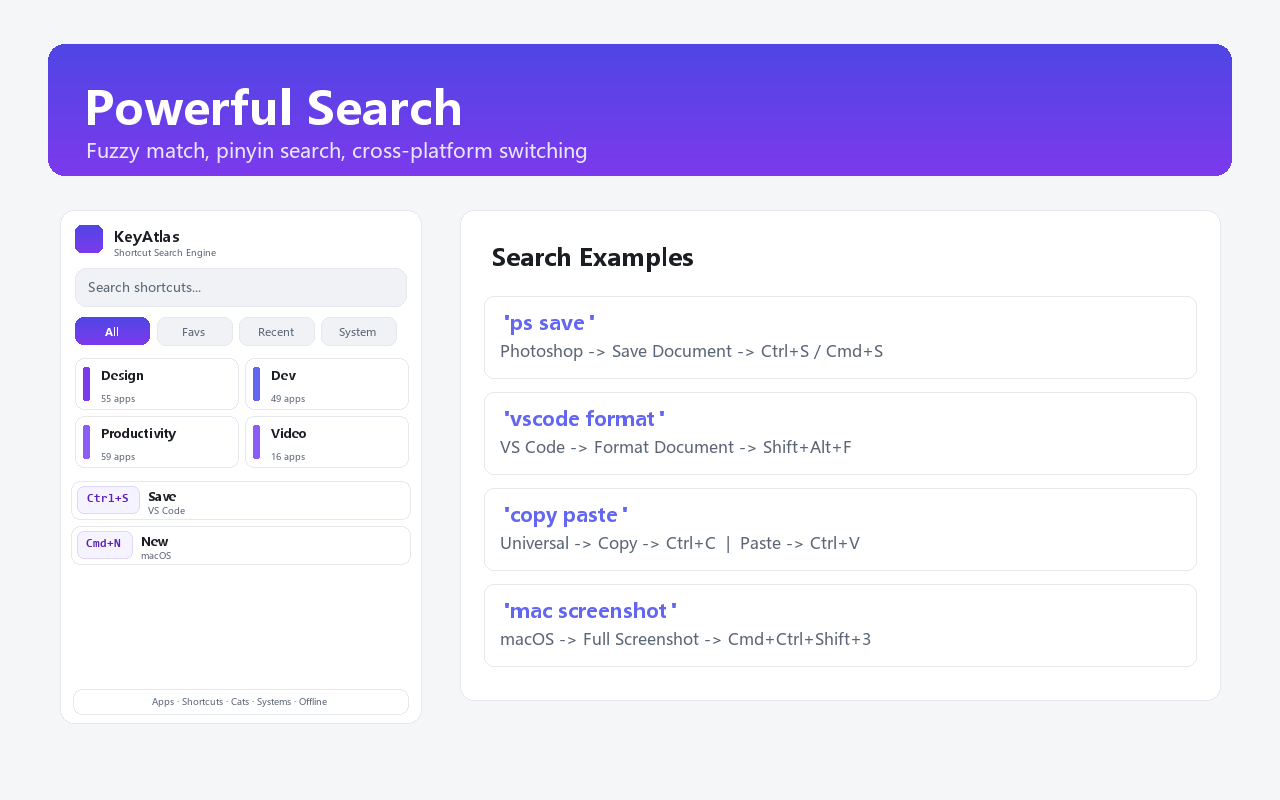
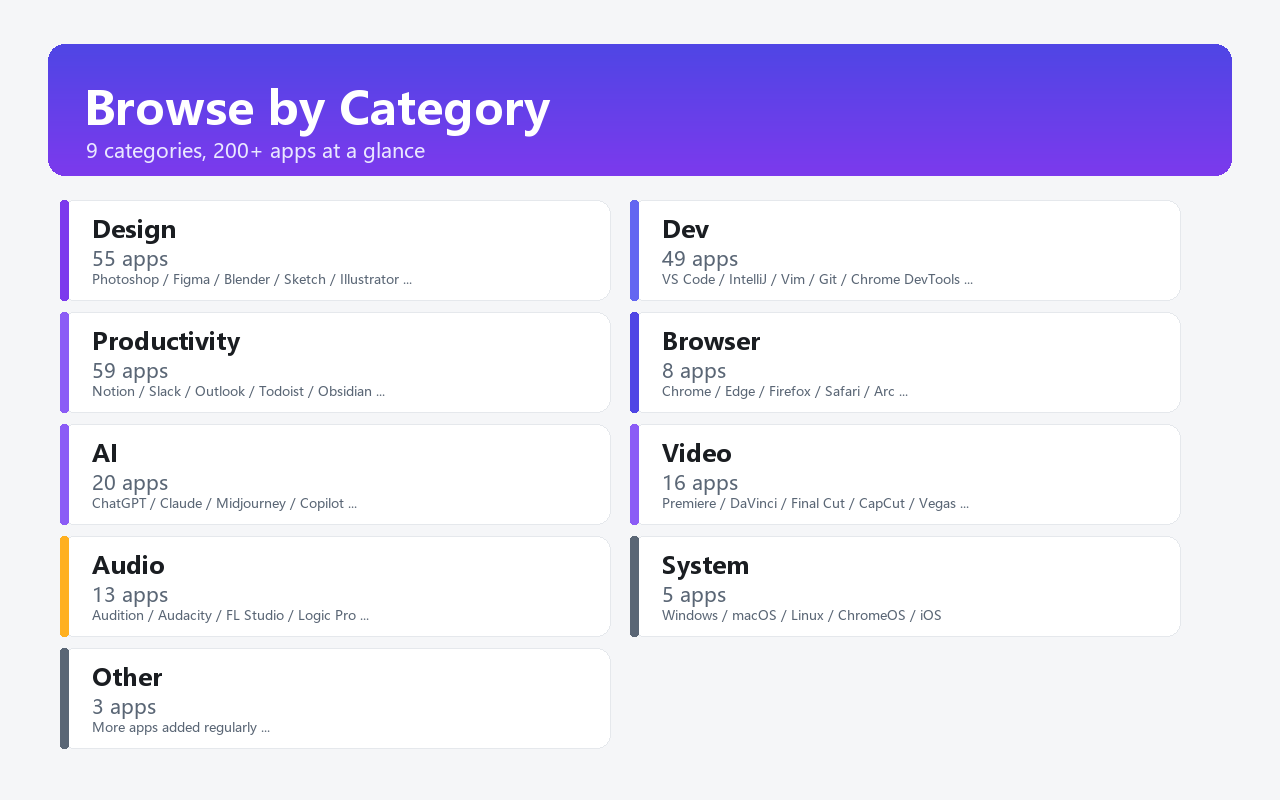
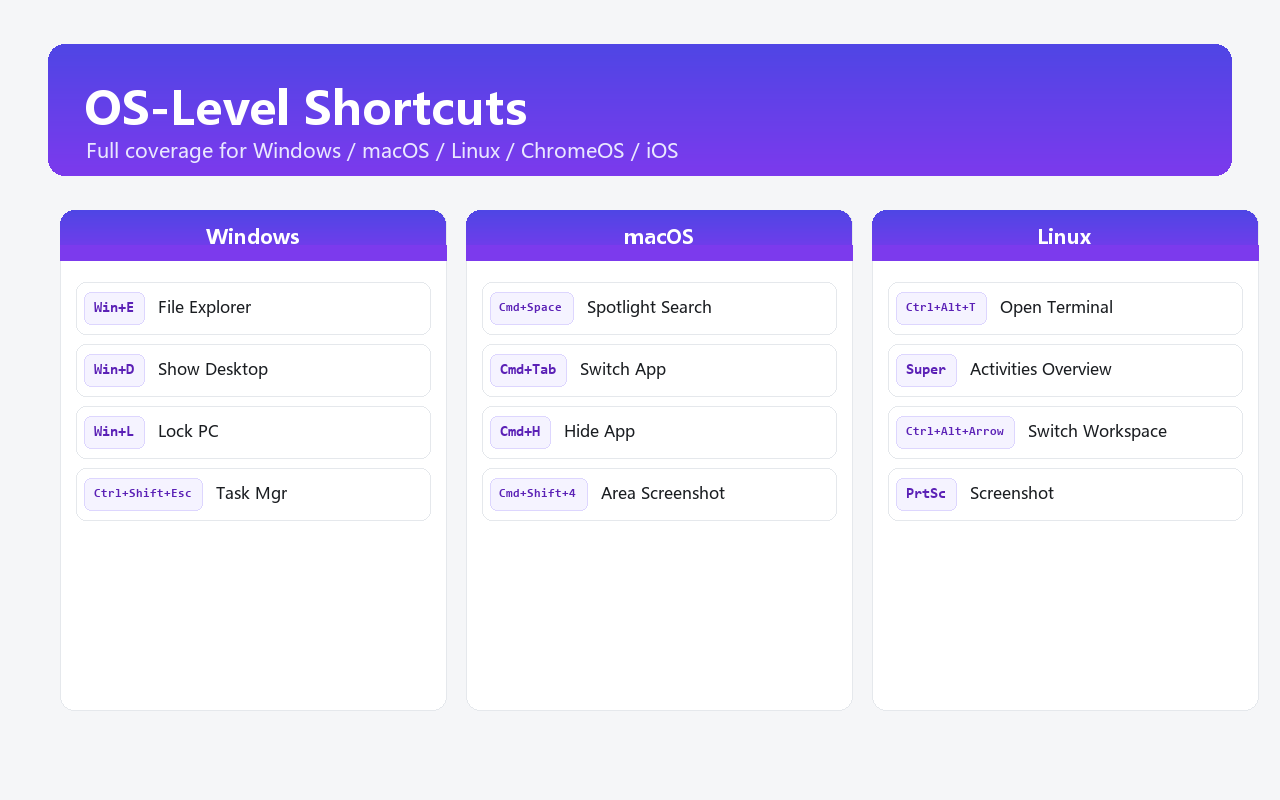
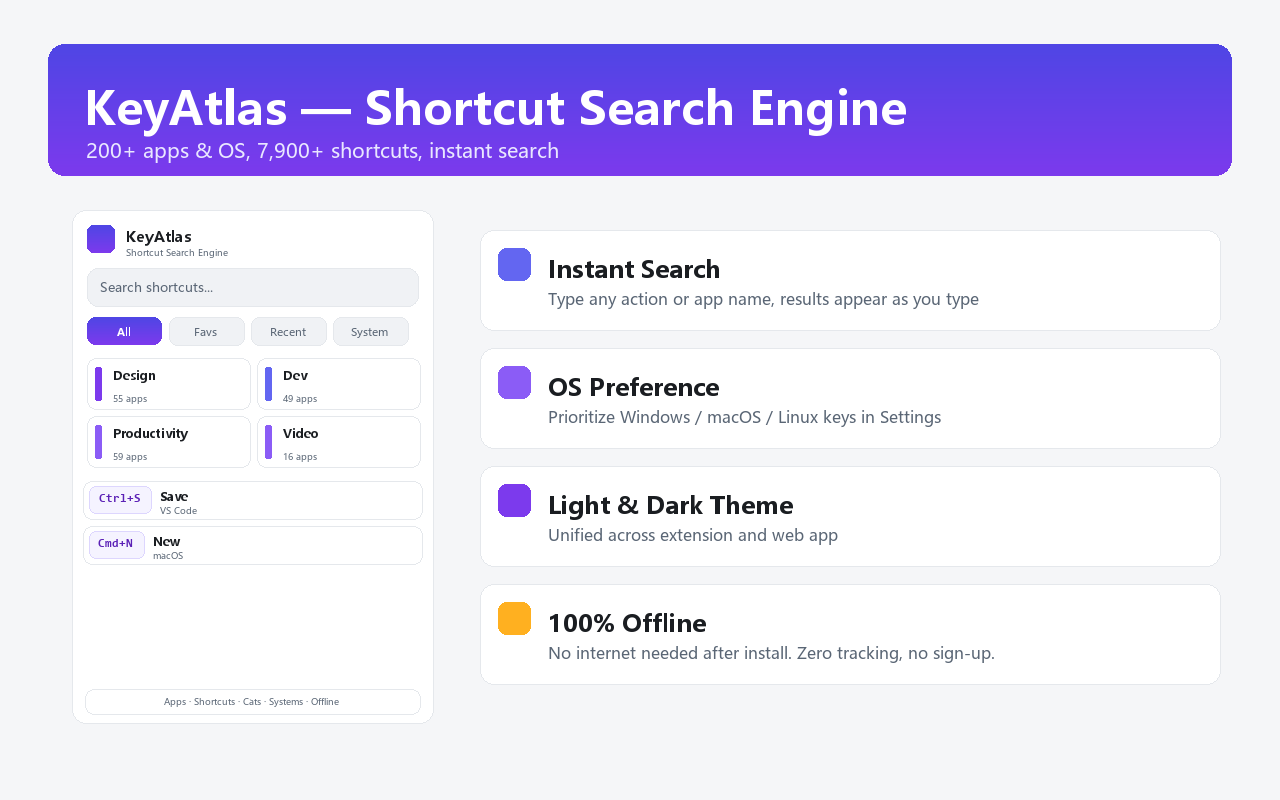
KeyAtlas stores shortcuts as a searchable dataset: type an action or an app to get the key combination, or browse by category. Windows and macOS variants share one entry, and the full dataset ships with the extension in English and Chinese.
03
Key product decisions
01
The dataset is the product
5,000+ entries over 200+ apps, kept as structured data — app, platform, category, keys — so one entry can be corrected without touching search.
02
Offline by default
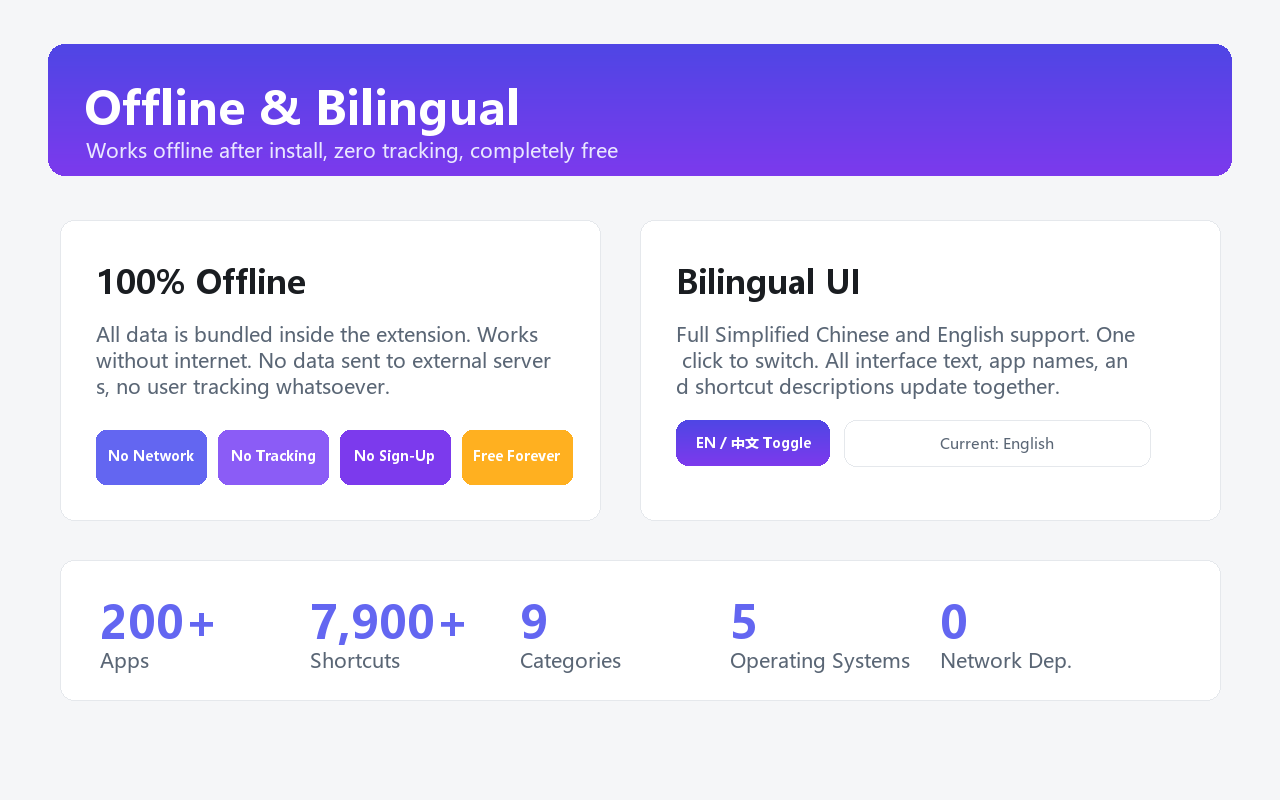
The atlas ships inside the extension: no network calls, no telemetry, no account to create before the first search.
03
Search first
The popup opens on the search field; results update as you type, and Enter opens details.
04
From friction to launch
01
Collect before building
The first months went into the shortcut list itself — checking entries against real apps rather than trusting one blog post.
02
Shape the data
Normalising categories and platform variants made it possible to search every shortcut the same way, in both languages.
03
Ship it as a popup
One search field, one result list, and details a click away.
05
What I learned
For a reference tool the product is the data: search decides how useful it feels, but accuracy and consistent structure decide whether it works at all.
06
Store promo graphics
Screenshots from the Chrome Web Store listing.